

the art that saves.
It All Begins Here
At the time I’m writing this we just had a full moon eclipse in Virgo, the air is feeling warmer, Pisces season is here and the forces calling us to reflect on our humanity, releasing expectations to make space for what makes us feel most alive and at home in our bodies.
With that intention flowing through me, I am centering the few human experiences that make me feel electric:
dancing
singing
reading
and especially
watching live performance art
I spent much of my childhood in sanctuary choir pews, theatres, and rehearsal spaces,
so watching live art is somewhat of a sacred ritual; a practice critical to sustaining this earthly body.
Live art always leaves me feeling something. So much so, I yearn to write about those feelings. For myself, to process what I just experienced, and for my community to share with me in that experience. As it is not lost on me the immense privilege it is to be able to prioritize live art the way I do. The grief of all the people in my community that are not experiencing a show with me is often part of what a live performance makes me feel.
Also happening in the world as I write this is the last day of Black Women’s History Week (created by Femenista Jones). This week calls us to celebrate Black women in the richness of who they are and all we offer to make our world beautiful.
& Black artists are doing just that. Pain, violence, instability, and harm surrounds us, yet through it all, Black artists show up to make beauty, tell stories, and instill hope even though they rarely get the flowers they fucking deserve.
Well instead of complaining about the lack of flowers, I’m here to give it to them.
With that, I share these special reflections on 10 live performances by and/or featuring Black artists that I’ve seen in the last year that have made me feel something. Please follow these artists, go see their work, and support them. We know how art is saving us all.
Diamond Flowers: Trans Day of Rememberance
This hashtag#TransDayofRememberance I’m remembering Diamond. Diamond and I met through a Zoom screen while working together on national Direct Cash Transfers programs, but we connected because we both lived and organized in Grand Rapids, MI. I was always inspired by her playfulness, intelligence, and boldness to say exactly what needed to be said. When Diamond’s contract in our shared work ended at the end of last year, I still thought of her often and how I would catch up with her again soon. That day never came. In April 2025, she tragically transitioned from this realm at the young age of 22. I was completely shaken by this news. Seeking comfort in our grief, my colleagues and I talked about her at work, but were surprised by the near apathy received from leadership. Business just carried on as usual. Wanting to find a way to feel close to her, I scoured the internet and archives to find more about Diamond. I couldn’t find much, but what I did find (including her obituary) only referenced Diamond through names, identities, and pronouns that I knew weren’t affirming to her life. To witness up close and personal how Black trans women are disregarded, disrespected, and devalued even in their deaths was incredibly devastating.
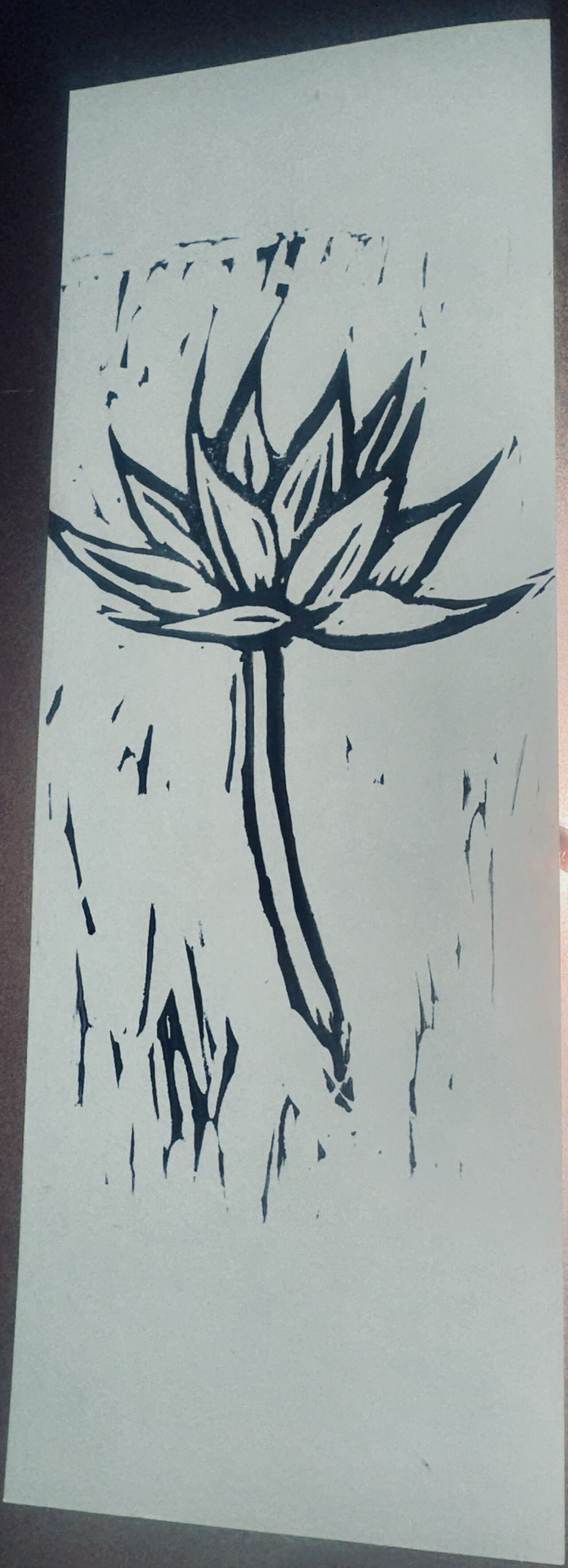
Gratefully, I ran into a mutual colleague I had with Diamond, who informed me of an in-person memorial service planned in her honor. I was able to attend the service, which was packed to the brim with people who loved Diamond. There, I learned more about Diamond’s incredible life. I learned about how Diamond loved breakfast food. How she was super competitive and loved a great game of “Spicy Uno”. How she was a steadfast supporter of her loved ones that were caretakers and a safe presence for children. How she had amazing, calligraphy-like handwriting. And, about her deep reverence for flowers, especially the lotus.
At the memorial, they gave all of us a copy of Diamond’s lotus flower in remembrance of her. I still keep the lotus flower on my desk and sometimes carry it around with me as a reminder. A reminder of her life, and a reminder to fight for a world where Diamond had more time.
So many trans folks deserve way more time.
hashtag#TransDayOfRememberance hashtag#TransIsBeautiful hashtag#ProtectTransKids hashtag#WeRemember hashtag#TransAwarenessWeek
Why Suicide Prevention Doesn't Work
It All Begins Here
Disclaimer: I am writing this from my perspective as someone with lived experience with suicidality and losing folks to suicide. I recognize people may not share these beliefs, and this could be triggering to some with experiences with suicide. I’m holding space for that, and feel free to only engage with this article if that’s healthy and safe for you. <3
September 10-16 is Suicide Prevention Week and September is Suicide Prevention Month. You’re likely to see people talking about how it is important to reach out for help, and how important self-care is. You might see the 988 Suicide Hotline Number. You might see tips about “warning signs” and what to do in support someone who is suicidal.
But as someone who this issue hits close to home for, none of those things really resonate with me.
Two years ago around this time of year, my childhood friend died by suicide. I recently comforted and supported my partner when their childhood best friend died by suicide. As a social worker and community organizer, I’ve supported many folks through suicidality or losing loved ones to suicide. And for as long as I can remember, I have been passively and sometimes actively suicidal.
That’s scary to write and to say because what usually happens when someone admits they are suicidal is people spring into a panic. They immediately want to say all the right things, make safety plans, provide the right resources, and do whatever needs to happen to stop the suicide.
And while I understand the sentiment, I wonder what suicide care would look like if we began to look at it as something we didn’t always need to prevent?
That might sound morbid or insensitive. But with alarmingly high suicide rates including it being the leading cause of death among youth ages 14-24, and those rates even higher for LGBTQ youth, it is evident that traditional approaches to suicide prevention may not work for all and we should look at something different. I’d like to introduce a different conversation as it relates to suicide prevention.
Here’s why:
Suicidality is a natural response to living in a racist, capitalist, oppressive society
One aspect of traditional suicide prevention tactics that is particularly difficult, is that it is looked at as abnormal or disordered thinking that needs to be solved. We want to encourage people to have hope and that it gets better. But how is it getting better? There are people sleeping on the streets, or in their friend’s basements, or they’re awake worried about how they’re going to make rent and eat this month. Inflation is real with living costs like food at an all-time high, but wages are staying the same. Even though those wages are staying the same, people go to work and are plagued by toxic workplaces, microaggressions, and poor work/life balance that makes it difficult to participate in the things that make life fulfilling. Climate change and environmental injustices contribute to poor air quality, climate disasters, and/or lack of food that devastate entire communities in more ways than one. And all of this trauma and injustice is on display for us to see all the time in the news cycle, on social media, or directly in our communities. Even without any additional life stressors, all of that is enough to make one feel hopeless and want to opt out of this life.
What would it look like, if we honored people for that hopelessness? What would it look like to approach a suicidal person like, yeah, this life is tough and we’re grateful that you can see that so clearly. What would it look like to recognize suicidal people for their bravery in appropriately naming that all of these injustices make life incredibly difficult to live? Wanting to die is a normal response to being alive, to existing in this deeply complex, flawed, unjust world. What if we, instead, committed to dismantling the systems that harm us and make us not want to go on? This acknowledgement and commitment could be a radical way of seeing the actual suicidal person and standing in solidarity with them.
Suicide prevention is carceral
They say knowledge and education is a powerful part of suicide prevention, so I want to paint a picture for you of what actually happens if you follow traditional suicide prevention steps. If you call 988 or someone calls the suicide hotline for you, first they will try to identify how big of a risk you are. If they determine that you are a risk to yourself, the police will be dispatched to your location. If you make it out of the police interaction alive and well (which isn’t guaranteed, especially for Black and/or disabled folks, or people with other marginalized identities), you may be forced to go to an in-patient mental health facility or a hospital. These facilities are not too unlike prisons. When you arrive, they’ll take your phone and do a strip search of you. They’ll take the majority of your personal items and anything that could be deemed as a threat. You are forcibly medicated and required to go to group and individual therapy multiple times a day, where you are forced to talk about your trauma and potentially be triggered listening to other people’s trauma. You are rarely allowed to go outdoors nor allowed to do stimulating activities. The food is subpar and you have no options on what to eat. You are only allowed to make one call a day, and your calls are monitored. There are visiting hours and approved visitor lists. And no, you will not be allowed to leave on your own accord. You have to go through a court system in order to leave, not too unlike if you’ve committed a crime. These mental health court systems have similar disparities to the criminal justice system, so if you’re a Black or Indigenous you may be stuck in the facility for quite some time. When you get out, you might deal with losing custody of your kids, getting expelled from university, losing employment, and a permanent record that comes with a stigma from medical providers forever. So yeah, not a fun, healing, vacation. As someone who had my own court-mandated stint at an in-patient mental health facility, the in-patient stay was more traumatic than the actual suicide attempt. I did and said all the right things so I could get out of there as soon as possible, and left the facility feeling more suicidal than before. If you’re a person that knows the intense harm that carceral systems inflict on people, consider that before using traditional suicide prevention tactics.
Suicide prevention is inherently capitalist
Having intimate experience with mental health and suicide prevention systems both as a practitioner and a patient I can tell you one thing: these systems mainly care about making money. It is a complex system that makes a ton of money off of people’s agony. When you hear about safety plans, and calling 988 and those types of interventions, those are typically in place because businesses and insurance companies do not want the potential liability of someone’s death. Therapeutic and other mental health treatments costs are extremely high, with only the most privileged really having access to care (and that care is often not culturally relevant or equitable). Even with insurance, it doesn’t cover the co-pays and deductibles and other miscellaneous costs. When you subject someone to suicide prevention treatment, you are also subjecting them to the financial responsibility that comes with that. I finally just paid off all the costs from my own suicide attempt back in 2015. Furthermore, these systems know that the higher the suicide rates, the less people available to contribute to our capitalistic society and workforce. All this to say, suicide prevention doesn’t actually care about the actual people that want to die.
Suicide is not always preventable
This point is a hard one to come to terms with, but it’s true. So much of suicide prevention is wrapped up in our own stuff, how we don’t want to lose the people we love, how we can’t go on without them. And all of that is valid and real and true. I know when I lost someone to suicide, I just kept thinking how I would’ve done anything to prevent it. Some of those suicide prevention tactics finally made sense to me, because if they had been used maybe at least he would’ve been alive.
But that’s selfish, and maybe not even true.
I’ve been thinking a lot about how Western traditions and discomfort with death contribute to our inability to appropriately care for suicidal folks. How even our limiting language, with the word “suicide” triggering a crisis response, doesn’t convey the expansiveness of people’s relationship with death. How some folks have a more intimate relationship with death and dying, and that’s okay. Absent systemic injustice or social stressors, and with access to an equitable joyful life, it is still okay to want to die. Sometimes, that just shows that you are still alive.
What if we committed to loving people, as they are, even through that? What if we committed to radical love, even if we don’t know if they’re going to stay? That autonomy and unconditional love can be transformative for people. So much of what suicidal people struggle with is feeling lonely and unseen. I know if I had someone that said, “I love you. Even if you decide not to stay”, I would feel seen and empowered, and validated.
So, given all that, where do we go from here?
My encouragement would be to continue to listen to and love the suicidal people in your life. To continue to educate yourself and think about alternative approaches to suicide prevention. And to continue to normalize these conversations with others in your life. A great resource/place to start would be some of the following Instagram accounts. These folks have put into words my experience with suicide prevention work, and I continually learn amazing things from them:
@thedeathsong.doula
@cait.deatheducation
@spectacularthoughts
@neuroabolition